
I consider occasional instability, exchange delays and inconsistent technical details among information intermediaries problems that will settle over time.
However, two areas urgently need clearer, more systematic rules.
1. System security and recipient identification
Some invoice details, such as prices, are trade secrets.
The system must not allow invoices to reach unrelated third parties.
That creates a serious security and confidentiality risk that the new system should not tolerate.
The Tax Administration often distances itself from invoice distribution, describing it as a relationship between intermediaries and taxpayers. But because the state mandated the channel, it bears moral responsibility, and this model necessarily raises questions about responsibility for network integrity.
What is needed:
a) clear recipient addressing criteria, such as an official directory of verified endpoints. We currently rely too heavily on intermediaries’ private databases;
b) official recipient verification;
c) an end to intermediaries independently guessing which email address belongs to a recipient
Intermediaries should have a strictly technical role, not an interpretative one.
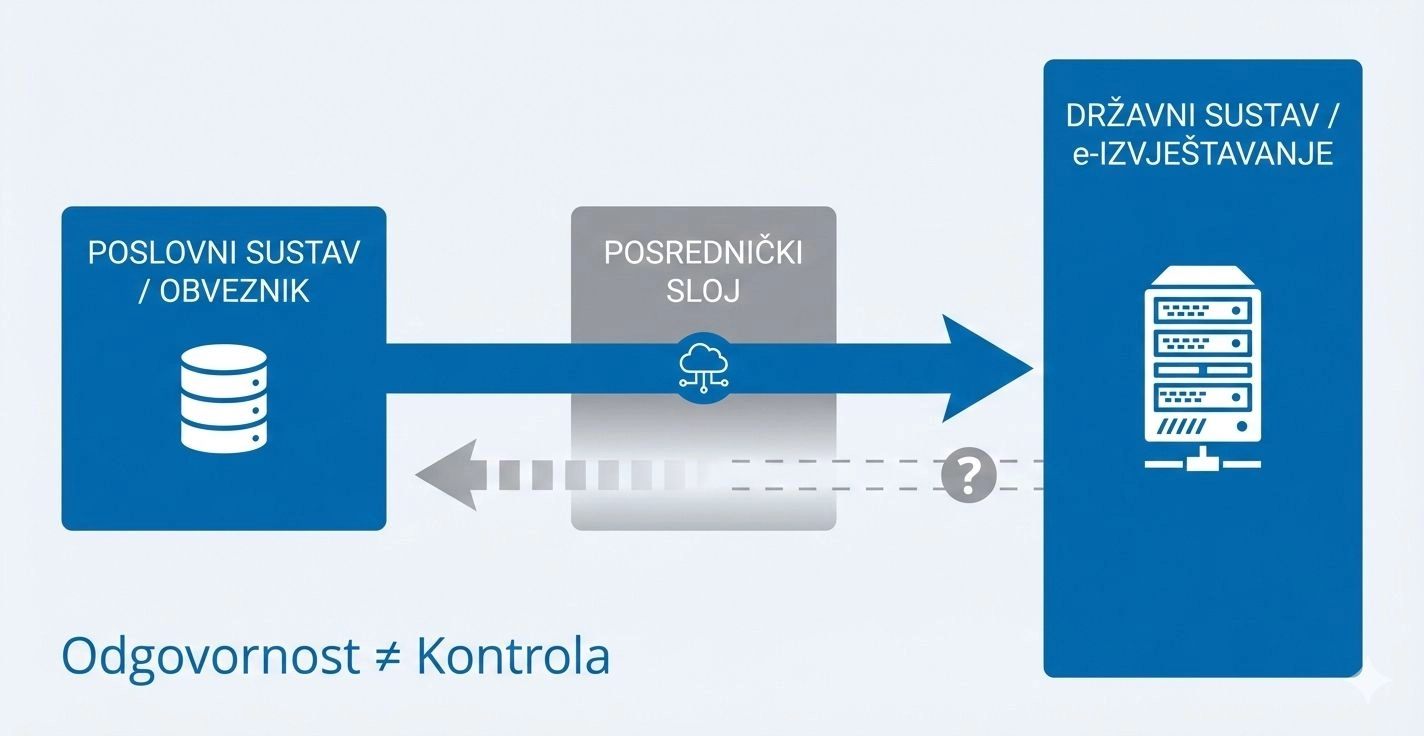
2. Separating responsibility and control
The legal framework formally places responsibility on the taxpayer.
In practice, taxpayers lack authoritative control over a key step: sending and processing the fiscalisation message from the intermediary to the Tax Administration.
Sending an invoice to an intermediary and receiving confirmation does not relieve you of fiscalisation responsibility.
The Fiscalisation Act recognises intermediaries as a permitted communication channel, but not as the source of final confirmation. This creates a legal and operational grey area for taxpayers.
In Fiscalisation 1.0:
— the fiscal identifier (JIR) came directly from the Tax Administration
— taxpayers held it in their own systems
— a JIR clearly confirmed successful fiscalisation
In Fiscalisation 2.0:
— confirmation may get stuck in the chain
— an intermediary may say “sent”
— but that is not legally sufficient
Either intermediary fiscalisation statuses should be legally recognised as official, or the Tax Administration must provide a fast, machine-accessible online status check.
By fast, I mean an API, not logging into an application to check invoices individually.
For Fiscalisation 2.0 to be operationally sustainable, responsibility must follow control, or there must at least be clear, authoritative, automated evidence that the obligation has been met.